

This article was originally published April 09, 2025, and was updated August 10, 2026, to include the latest program information.
The concept of the sustainable value chain is attracting attention across industries as a way to improve business outcomes.
The approach, which incorporates environmental and social considerations into various stages of a product’s lifecycle, not only answers the growing calls for corporate responsibility but also unlocks a host of economic benefits—from increased efficiency to enhanced brand loyalty.
As more businesses pivot toward integrating sustainability into their core operations, the demand for professionals skilled in managing sustainable value chains is skyrocketing—leading to a new wave of education and job opportunities.
What Is Sustainable Value Chain and Why Does It Matter?
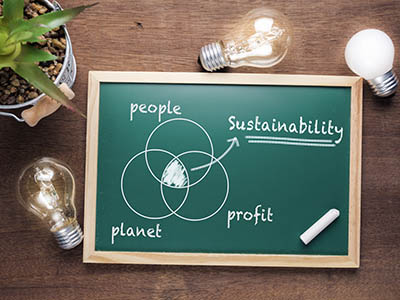
Sustainable value chain is a concept that expands upon the traditional definitions of supply chain and Michael Porter's value chain concept by integrating environmental stewardship and heightened awareness of workforce and community outcomes.
The framework of the sustainable value chain developed, in part, as a response to today's global economy, where businesses are held increasingly accountable not only for their day-to-day operations but also for any resulting ecological and ethical impacts. The modern consumer is demanding greater transparency, driving businesses to adopt sustainable practices not just as honorable decisions but as strategic ones—to foster innovation, mitigate risks, and boost competitive advantage.
Developing Trends in Tech & Sustainability
Technological innovation and sustainability are converging to reshape the global business landscape. With digital transformation spending projected to reach nearly 4 trillion U.S. dollars by 2028, and the rise of renewable energy and eco-friendly materials highlighting sustainability's growing relevance, businesses are finding new ways to merge these advances.
In practice, this might look like employing blockchain for supply chain integrity or leveraging AI for energy efficiency, just to name a few. Many of these new tools are designed specifically to help increase transparency or reduce resources and waste—central components of sustainable value chains.
A Shifting, Global Workforce
The advancements and heightened interest in both technology and sustainability are fueling strong growth in several fields related to supply chains and sustainable value chains.
Employment for logisticians, for example, is expected to grow 17% from 2024 to 2034, and the job market for data scientists is projected to grow 34% from 2024 to 2034 — both much faster than the national average.
Other related occupations expecting growth in the next decade include management analysts, financial analysts, operations research analysts, and transportation, storage, and distribution managers.
James Falter, former associate dean of UMGC’s accounting, finance, and economics programs, emphasized this point, stating, “These fields are growing and changing every day, with new advances in analytics and data transformation opening up fresh opportunities for folks well-versed in value chain dynamics.”
Not only are these fields in high demand, Falter said, but the skills they require are transferable across multiple industries—including manufacturing, energy, technology, and service sectors such as healthcare and retail.
UMGC's New Sustainable Value Chain Degree

To meet the needs of this evolving job market and these emerging global trends, UMGC is offering a bachelor’s degree program focused exclusively on the sustainable value chain.
This highly interdisciplinary undergraduate program merges critical business skills with sustainable approaches—and helps prepare students to become impactful leaders within both commerce and our global community.
With a comprehensive and flexible curriculum that features business analytics, data science, environmental systems, marketing, and risk assessment, among other subjects, students are able to customize their learning journey toward specific career goals or certifications required in the modern workplace.
Balancing Profit & Planet
As the corporate world increasingly prioritizes environmental sustainability, a new generation of career opportunities is emerging, focusing on aligning business operations with planet-friendly practices. The Bachelor of Science in Sustainable Value Chain degree at UMGC is at the forefront of this shift—aiming to equip students with the knowledge and skills they need to navigate and succeed in this new landscape. Stay tuned.
Reference on this webpage to any third-party entity or product does not constitute or imply endorsement by UMGC nor does it constitute or imply endorsement of UMGC by the third party.

/blog-umgc-alumni-calendar-banner-linklist-shutterstock_2094188977.jpg)