


Speaking the Language of Care: Listening, Learning, Leading
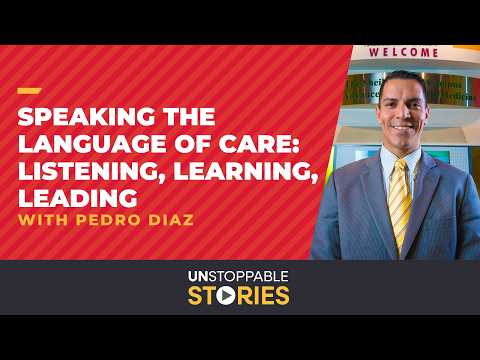
In this episode of Unstoppable Stories, Pedro Diaz, Director of Language and Guest Services at Children’s National Hospital and proud UMGC alumnus, joins host Nathan James, to share his remarkable journey of compassion, connection, and leadership in healthcare. After recognizing the deep disconnect between non-English-speaking patients and the U.S. healthcare system, Diaz made it his mission to bridge that gap through empathy, cultural awareness, and trust.
He opens up about what it means to truly listen to learn rather than just listen to respond, and how taking the time to understand people’s needs and worries can transform care on every level. From leading multilingual initiatives to empowering others through education and teamwork, Diaz reminds us that leadership isn’t defined by titles, it’s a mindset built on influence, humility, and heart.
This inspiring conversation is a powerful reminder that in any career or stage of life, connection is the foundation of impact.
Episode Information
Pedro Diaz:
Representation matters. It's important to me to see people who sounded and looked like me. People who brought out that unique perspective because it is unique. It needs shapes how you access services, how you receive information. It allows you to perhaps ask questions that people that have not had to learn through your own experiences and think of.
Narrator:
Welcome to the UMGC podcast. Unstoppable Stories with your host, Nathan James.
Nathan James:
Hello, everybody. It is good to see you. I am here with Mr. Pedro Diaz, who is the director of Language and guest services at Children's National Hospital in Washington, DC. And, Pedro actually earned his MBA with us last fall as well. And so he's a UMGC grad. Pedro, thank you for taking time to be with us.
Nathan James:
Today. No.
Pedro Diaz:
Thank you. Well, thank you for having me. I'm very honored. Thank you.
Nathan James:
Really looking forward to digging in. Let's start with where you grew up. Talk about where you grew up and what your career aspirations were.
Pedro Diaz:
Sure. I was born in Lima, Peru. So, I'm originally from South America, where I lived most of my life. I'm of the United States. In 2001. Basically, my my goal was to to enter law school. I didn't have, like, quite a clear career, but when I was growing up. But my dad is a lawyer, so I thought he seems to be doing well, and he actually encouraged me to apply.
Pedro Diaz:
I'm the youngest of five, and none of my siblings wanted to pursue a lot. So I think he was hopeful that one of us would follow his steps. So I, I came with the intention of, becoming a lawyer. But as an undergrad student, I needed a job to be after the, and one of the skills that I had, was being bilingual.
Pedro Diaz:
So, while I was going to school, I applied for a job, in an inner city nonprofit. In Baltimore, I provided healthcare services to a large number of Hispanic and immigrants from different parts of the world. And it was actually located across the street from the International Rescue Refugee Center. So it was a mix of patients who live in that in Baltimore City, but also a mix of patients who came from other countries, to seek asylum and also immigrants who live in the area.
Pedro Diaz:
So when I was working there, it so happens that, I was able to do one day when I was actually just working in customer service, the manager of the clinic came to me and and said, hey, do you speak Spanish? I need your help. And she pulled me into a room, where there was a patient behind a curtain, and she asked me to help the doctor.
Pedro Diaz:
I knew doctor spoke English. The patient didn't speak in English, so I was able to help them communicate. I was very shocked because I didn't know what I was doing. Very honest with you. And when I left the room, the clinician in another room. Long story short, that was my introduction to what's called medical interpreting. So I wasn't trained, I wasn't prepared.
Pedro Diaz:
I did my best. But then, I felt that there was some disconnect between what they wanted me to do and what was supposed to be done. They're going to a session that I worked at, essentially investing in me. So trained me. I became a qualified interpreter. So basically I went through that training to become a medical interpreter.
Pedro Diaz:
But in that organization, there was a huge gap between their communication and how it supported services. For those who spoke a language other than English. So I was able to do a little bit of everything. I did referral coordination, I helped schedule appointments, I helped communicate and set up, study. So that's when I really realized what a gap there is to serve populations that are new to the country who are not familiar with health care.
Pedro Diaz:
How complex health care was, to be honest with you. And I got bitten by the bug of working in healthcare settings. So I realized that I wanted to do more. I would realize that I had the skills in operations and to be able to understand processes and make it really make me feel valued, I we even did a survey to to be able to assess the perceptions of those patients about the quality of the services that they received and then the defined gaps, which I use to come in here with leadership.
Pedro Diaz:
Long story short, that's when I realized when I have to work in healthcare administration. So after working for other organization, I went to, a large healthcare system in Baltimore. I work as an interpreter. Then I had great mentors who who basically gave me opportunities to work in an administration operation. So I worked for the international side of this health system.
Pedro Diaz:
Then I felt like my capacity to support outpatient care was very niche. So I went into hospital operations. So I led patient access for radiology in this health care system. And after working there for a while, I went back to my roots in language access. So I joined micro, an organization. I had the language access manager. I had a great leader who then realized that my skill set and my background could help support other areas.
Pedro Diaz:
Which led into me becoming the director of language services, which includes all language access for the organization, but also the hospital operators team, who manages all the incoming calls for organization and alerts, and also the welcome desk, which are the appointments entry for the training sessions. So it's been a journey, but it's been really rewarding.
Nathan James:
I mean, that covers a lot of ground. How long have you been, the director of language and guest services at, children's.
Pedro Diaz:
It would be close to four years in February. March of next year.
Nathan James:
Wow. As the time's on by fast.
Pedro Diaz:
Yeah. Yeah. You know what? I have fun, right? Is kind of fun, right?
Nathan James:
Wow. I mean, you've come a long way from being, what, basically a scheduler in Baltimore, right? At that inner city clinic. Kind of, take me back to that time where you felt, it sounds like a passion for you. Really ignited. I mean, you had a plan of being a lawyer. Yeah, right. And you had that aspiration, and that's great.
Nathan James:
But eventually, this captured your heart. I'm guessing that had something to do with, seeing the situations that your clients were caught in, right? I mean, that's a tough spot to be in. To be sick or to have medical needs and not know the language. Yeah. So tell me a little bit about what? About that really ignited your passion for doing what you do now.
Pedro Diaz:
So I think two things I think the first one is and personally, I, I mentioned I'm the youngest of five, but my eldest sister, she was born in a very early on, very early on when she was a year, six months. She contracted meningitis. So my, so she she overcame the illness to a certain extent, but she, had special needs.
Pedro Diaz:
My parents had to face and provided special care for her through our her life. So I grew up with that, with a sibling, basically. That, required a lot of care. So, watching my mother and my father navigate, that was something that impacted me personally and gave me a sense of awareness of how the world can view someone that is different, but also that requires accommodations.
Pedro Diaz:
And how are you prepared? Sometimes we are, which to me, it just made me realize that there's something that I wanted to do to protect her and, gave me a soft spot for her to realize how much we take for granted, on that day to day basis. That paired up with my experience coming to a new country, you know, where I myself had to adapt to a different culture and understand, even though I spoke the language, a very complex healthcare system, because, you know, you you're not aware of how difficult this meeting is sometimes something you are yourself sick, right?
Pedro Diaz:
And I'm fortunate I. I had access to health care. I had access to insurance, and, and when I started the job in this smarter healthcare system, set of clinics, many of the patients were, individuals who didn't have access to to do insurance, or they had to apply for a sliding scale services or fees, or they had access only to primary care, but not to specialty care, or they didn't speak the language.
Pedro Diaz:
And, you know, it was very and they, they could have been my mom. They could have been my brother and my sister. They could have been someone in my community. And there were members of my community. So I felt that it was important to to give back and to ensure that if I was given any, any opportunities to influence, positive change in their lives when they needed the most was kind of like a miracle, right?
Pedro Diaz:
Because you never know when you're going to be on the other end. And you would hope that's if you have every need that somebody looks at you and have compassion and and that's whatever is possible to try to help you. So, that really motivated me a lot, and I still does. Must I still instill this?
Nathan James:
You know, scenarios coming to my mind of, just I just want listeners to imagine potentially how scary it would be to be in, a foreign country where you don't speak the language and you're desperately sick, right? And so you know, Pedro, you're dealing and working with and, like you said, making folks feel cared for who are in very challenging situations where there's fear, too, right?
Nathan James:
And like, I remember even I had an experience at Children's National Hospital. My, my sister, fortunately, had appendicitis. My little sister, a number of years ago when we were kids and, you know, they essentially saved her life. And there was a very, very scary situation for my family. And I can only imagine how much more scary it would have been if we didn't even speak the language.
Nathan James:
Right. So, for folks who were coming to a medical setting like this, with that type of vulnerability. Pedro, I don't know if even if you have an example of what? How do you make someone feel safe and not be afraid when they feel the fear of being sick, but also the fear of not knowing the language?
Nathan James:
How do you make them feel safe in a moment like that?
Pedro Diaz:
I think my experience in pediatric health care is there have always been very positive, because working in an environment where you take care of children, people come in and words and jargon to have a very common goal, a very unique, common goal, right. You're dealing you're trying to provide care not just to the patient, but to the family unit, whatever.
Pedro Diaz:
That's it look like, so you're helping them in, within their journey. So and starting from that place where we all share the common goal and values, it's a great place to start because you truly are surrounded by people who have their patients and their family at the center of everything that we do. I think where we come into play is that we make that intentionality clear in a language that they understand.
Pedro Diaz:
So those behaviors and the words that are expressing their language that they may understand our team that's provided not only in their native language, but using the same tone. Also, one thing about language access is that you don't just tool word by word is also ensuring that you're paying attention for potential clarifications and sharing that you are, intervening when perhaps someone is nodding and saying yes when you realize they don't understand what you're saying.
Pedro Diaz:
So you are you're allowed to do parties where there is a doctor right there patient, and to revisit that potential discrepancy or obligation to connect again. Our programs, for example, are also involved not only in the clinical care aspect of their experience. So we have so many programs like we have child specialists who who use, educational techniques to be able to teach families, procedures and children to understand what's going to happen to them in a healing garden where they do activities where children can still be children even though they're admitted in the hospital, like just recently they had a prom party for patients who couldn't attend their own prom, but they could come.
Pedro Diaz:
parties here to be kids again. So just because you stop just because you're in the hospital and you're receiving treatment, doesn't mean you stop being a child. And for example, one more thing. Before I forget, this happened today. I was run into a colleague of mine who runs the events on On the Ceiling Gardening, which is an indoor outdoor garden.
Pedro Diaz:
And they hold events every day. Right. So we make announcements over the over three days in the overhead system, letting them know patients and families visit us at the healing Garden, and we're going to have this particular event, this celebration, this festival. Our announcements are made in two languages, at least. And she was telling me, you know what?
Pedro Diaz:
We realized that more families who are speaking another language are showing up better students. And this event speakers, these announcements are now being made on the language that you're seeing. So they get to experience these other nones, these other activities, you know, and initiatives where families can just enjoy being a family even though they are behind the doors of a hospital.
Pedro Diaz:
Right. And I find it fascinating. Because you want to create an environment of healing.
Nathan James:
I really like that phrasing. An environment of healing. It's family friendly. It's safe. Right. Okay, okay. By the way, again, everybody, we're talking to Pedro. Diaz, Umkc graduate, with, the latest unstoppable story. And, so I'm going to move right into, the next question, which would be, actually, I'm curious, you're in the DC area, obviously nationals in DC.
Nathan James:
I'm sure you come across a host of languages. Do you have an estimate for how many languages that you see? I mean, I'm sure it's not 2 or 3.
Pedro Diaz:
No, none. Not two and three. So we I would say like any given year, we have an average of 20 plus languages per set. Wow. However we provide, so we don't only we only, we not only have in person interpreters for languages, we also have video remote devices that are deployed through how the whole organization where you can tap, an iPad device, for example, I connect with that video remote interpreter for over 70 languages within a matter of minutes or seconds.
Pedro Diaz:
And we also provide over the phone interpretation for over 200 languages, by just picking up the phone and dialing a number. And because for some languages you might not have that a daily reality of an in person in the area, you might have to do one on the other to an another part of the country, for example, or the world.
Pedro Diaz:
So but we have a large spoken language population. Spanish are big Mandarin or do Farsi, Pashto, Amharic. And then we also have a large that the hierarchy in population that, we provide American Sign Language services as well. So it's quite niche.
Nathan James:
Okay. Let's talk a little bit about your journey into leadership, right? I mean, you started again, you know, at this Baltimore clinic as a scheduler and you're working your way through college. And, at the time, I believe, as well, can you tell me what were 1 or 2 of the most key events or maybe one of the two most inspirational people?
Nathan James:
That helped you transform right into this leader that you are today?
Pedro Diaz:
Yeah. I, I am very grateful because I had wonderful mentors and leaders that took a chance on me. I, I wish I would have said that. Yes. I was so driven that I, I mentor and I wanted and I had a very clear I, I can remember two people. One was my first manager when I was a medical interpreter who had been my first leadership position, in the larger health system in Baltimore, where I lived.
Pedro Diaz:
He so happens that she needed she she needed some administrative support, leading a smaller part of her team. And I was quite quick, technology wise. So she asked me to cover. But as I started to cover, she started having one on ones with me and seeing leadership skills that I and being very clear about.
Pedro Diaz:
What I needed to do to improve. So I always say that she wasn't afraid, her hand did not shake and she had to tell you something. You know, she she was very straightforward, very precise. But at the same time very smart. And I saw how she approached and coached me on how to navigate just the organization. So she gave me her first leadership role, and under her mentorship, I was able to grow into a manager.
Pedro Diaz:
She herself was also from another country. And she herself. Yeah. Yeah, she was from Japan. So, her her her ability to remain, poise and composed, and be able to give feedback in a in and direct way, but was very it was very helpful to me, because I needed that in a leader and its heart was very on as someone who was very straightforward.
Pedro Diaz:
She taught me a lot. So, yes, about role modeling behavior, which is something I, as a young, student and being a learn to be honest, when I moved here was a long as I didn't have my family nearby to check in with, I looked up to her, and then later on on my career, when I went into clinical operations, I had a fantastic administrator.
Pedro Diaz:
She was a very, a very, a very charismatic leader. She was able to mobilize a large operation and had her leaders sing at the turn of her words, like we were like we followed her. We follow it. She could tell us that to do crazy things with that time frame sometimes, and we would be like, we can do this because we know that we will have your back.
Pedro Diaz:
So she always gave us a lot of support. She, she also had a great sense of humor.
Nathan James:
Her, which I that helps a lot. Yeah.
Pedro Diaz:
Yeah, she was funny. But she. And she knew her operations so well, and she protected her people. She always had your back. So you give it to you straight. But you knew that she did it because she care. So she her integrity is something that I always look up to. Because no matter what happened, she.
Pedro Diaz:
She always stood her ground. And she lived the values that she professed to others. So to me, that was very inspiring. And she also invested in us. She invested in our development. She gave us projects that were challenging and learning opportunities where we could apply our skills. It was it was wonderful. So when I had having those two people, one for my view on leadership and my to to believe on my abilities really shaped me.
Nathan James:
Yeah, that's what I was thinking. The belief, you know, both of, the managers that you mentioned there clearly showed big time belief, right. Where they knew you could do things that maybe you didn't even know you could do. But their belief in their confidence was so strong, even if it was a small it was it was a deadline that was coming up quickly.
Nathan James:
Of course we can do it, because we can. You know, that's powerful.
Pedro Diaz:
Yeah.
Nathan James:
Okay, now you, you know, you mentioned even your first manager, was a minority leader. You mentioned Japanese. I think, again, looking back on that, what would you say is the importance of having minority leaders? At the table, of of leadership, in health care in particular.
Pedro Diaz:
Representation matters and, I was looking first. There were both female leaders, which I look up to because I also understood that they had to overcome, perhaps in a team of male leaders across the board, you know, they probably they and having these conversations openly and honestly with them, sometimes they would share some of the challenges and it made me realize that we had more in common that that I thought we did, many times have and this is my own experience, so I don't expect everybody to share the same view.
Pedro Diaz:
But, you know, sometimes I felt that I needed to bring my arm chair to the table. I'm not afraid to be manager in the table, but I think it's important to me. Lisa was important to me to see people who sounded and looked like me. People who brought at that unique perspective because it is unique. And now it is.
Pedro Diaz:
It is shapes how you access services, how you receive information, how, it allows you to perhaps ask questions that people that have not had to watch or your own experiences to and think of, not for lack of interest, but because it's not their point of view. And also it helps you share and educate others informally or formally, sometimes on your own experiences.
Pedro Diaz:
At the very beginning, I must say that yes, I was not always invited to every single conversation, but by inserting myself in conversations I was able to be invited. And having that curious mind. And so that's. You just have to ask, hey, can I just. But I was this meeting about, oh, can I attend, an initiative?
Pedro Diaz:
Yeah. Just listen, listen to it. Because.
Pedro Diaz:
If you won't as is. Not because they didn't want to invite you sometimes, you know. Right. So, you know one way that's true.
Nathan James:
Yeah. Because I don't think don't take it personal kind of thing. Right. Oh, they don't want me. Oh, that's just too bad. Never mind. Let me go into a corner.
Pedro Diaz:
No, no, I, I, I strongly believe that no one wakes up in the morning thinking, how can I upset someone today, right. Like, yeah, it was, it was wake up and think, you know, how how we went to have a good day, how we want to help others, how we want to make a positive impact. So we used to call these, thinking of the positive intent.
Pedro Diaz:
Right. We all want to have we all have positive intentions. So when used and does forget that that's the case. That's where you have a chip on your shoulder. But asking how asking made clear questions from that in a in a language that that's not sound I guess, you know, rude or obnoxious and demanding, but more like with a curious mind, trying to learn, listening for learning, not listening to answer.
Pedro Diaz:
Yeah, I think it's. And dancing makes a difference.
Nathan James:
No, that's really good. Can you think of any, lessons that you learned in your during your time with you NMDC with you MBA that you've been able to apply, to your career as a, as a director. Now, even.
Pedro Diaz:
Though I've always been in person, you can say work in a hospital care setting, a lot of our I've been taking on a lot more large scale projects. That requires a lot of more remote virtual planning. So I have assume more of not only might the leadership roles have your actor, but the project lead on many, many projects.
Pedro Diaz:
Which is also something that I had to apply. Well, I was in class because perfect. Also my downfall. I'm always going to be that person who likes to have a spreadsheet and to assign roles and to run the agenda. I that's, I like deadlines. That's just me, you know. So however, you know, like working on topics that I wasn't familiar with and I was going through my program and having to learn those and having to delegate and try as my partners and communicate so that project management skills, so that you have to kind of like apply on the work that you do as a student.
Pedro Diaz:
But also that research, how to conduct research and how to look at, reliable resources and available resources has been really helpful as well, because it provided me a broader aspect of how to look into that. So I would say those were more of the that's was one of the lessons that I still apply every day.
Pedro Diaz:
And we live in a world where virtual management of teams is just a requirement, right. Like my teams are now in different sites, in different places. And be able to utilize your tools to manage those teams is also something that I learned. While I was doing this. Now it not only be in a virtual program, but that was part of how we did a lot of our, you know, projects.
Pedro Diaz:
When it comes to doing analysis of projects being launched internationally, etc.. So that's something that I thought that was very helpful and practical.
Nathan James:
That's wonderful. Let's go back a little bit to the fact that, you know, you've been able to, being bilingual, just be able to use that skill set in so many settings during your career. For our listeners, if someone is listening right now for the for our listeners, were bilingual, right? And wondering how they can use their gift, right?
Nathan James:
How they can use that to help others, but they're not sure where to start. Right. What advice would you have for first for them?
Pedro Diaz:
I mean, I, I first, I think that you can make a difference whether you, wherever you are. Right. But I think in any in personally in my field, there's work to be done. If you are a bilingual employee in any healthcare setting, it's in your language. You could be using any setting that you have, like communication, how you communicate in the event, reading materials, how you communicating verbally.
Pedro Diaz:
You know, what is there. How do you build access for patient populations? Now there's a lot of outreach initiatives. Get involved. To be honest. Get involved in your communities. A lot of, the opportunities are there. You just have to do research on them, like you find them. So in their field of medical interpreting is not just medical.
Pedro Diaz:
You can do interpreting business, you can do interpreting legal, you can do interpreting in some of the different forums. And they're available out there. So I would say start asking questions within whatever you are like, you can apply those individuals in anything that you do to enhance.
Nathan James:
That's fantastic. What about for folks who are, what advice do you have for someone who doesn't feel ready for that leadership role just yet? Maybe it feels like it's too much pressure. You feel like you have more to learn. What do you actually have for folks in that situation? But they still want to grow in order to be ready to be a leader and overcome that fear.
Nathan James:
To be a leader.
Pedro Diaz:
Yeah. I mean, I, I do believe that managing is up for everyone. That's that, you know, true. And it's not it's not a I don't think anyone should ever take it as a sign that you're not a leader. You can still be a leader and not hold a management role.
Nathan James:
It's so true.
Pedro Diaz:
You we leader. A leadership is also a mindset and is that way you influence others around you. And in order to be a leader, you also know how to follow. Right? So, having that that cultural humility, to, to know that you have to do something to take this step, a step back, to follow others. I have a different skill set.
Pedro Diaz:
Then use value again. I think that one of the main. I struggle with this one, to be honest, but with the summit talker. But listen, man is a very powerful skill. In order to to lead anyone, you need to know who you are leading. You need to define what is the role that you drive to account for just a team to inspire them.
Pedro Diaz:
What motivates them? But I'd say that if you are afraid, join causes that are really linked to what drives you, that are aligned with your values, because those tend to be there. You see, whether they're like job wise or not. That's when you start discovering what true leadership means to you. And, and I think leadership is also just emulating behaviors.
Pedro Diaz:
You have to be genuine. So, I had great leaders and I tried to look up. I never wanted to change who I was, but I always but I wanted to improve how I look. So as people, and allow them to give you feedback, feedback is important because we don't see that you don't grow.
Nathan James:
Yeah. Very good. Listen, I, I the importance of listening, I just can't be overstated. I'm so glad that you emphasized that. And and, I remember I got advice, like, to be the best leader, you need to be an amazing follower. Right? And so the humility that comes with that, is you just can't understand it. Oh, that's so good.
Nathan James:
Pedro. You know, there are people who believe in life that there are no accidents in life, right? Things happen. Everything happens for a reason. Your words, how would you say your detour? Because it was kind of a detour. You were thinking you're going to get a law degree, you know, inspired by your dad. And then here you are now, right?
Nathan James:
You're working in in health care. How would you say that detour for you changed. You know your life, right? From going to law to now doing health care. In the setting that you are right now?
Pedro Diaz:
Yeah. No, it it really changed, I think, when I came back to working with languages and access, and then led me into my other in my current role, per se. I was in the, in a part where I was more disconnected with direct patient impact, and I was more into that project site, which is fine. I still do it.
Pedro Diaz:
It's not that focus of what I do, full time, but I still do it as part of my current role. But I think that going back to what drove me. Right, what what and what meant what gave me that for sense of fulfillment personally. Because I feel that if you're working in the healthcare environment and you are not aligning yourself to the values of an organization, it's really hard to keep engaged and motivated.
Pedro Diaz:
This is a field where you are helping individuals at their most vulnerable time of their lives. And, so your role is not who's married to put yourself first. And that's why you need to surround yourself with people that will understand what you're going through. And you can partner with and find strength when you also you did it yourself.
Pedro Diaz:
You know, people that come here every day is they're leaving their families, their loved ones, perhaps going through their own journey themselves. But we have put that aside because we're here to help that patient. That's how we do it in that room whose life could change at any time.
Nathan James:
Yeah.
Pedro Diaz:
If you focus on being a parent to their child and we can worry about everything else while you're here so you can feel supported, right? So that that aspect of looking at my peers and my stance and understanding that this is the sacrifices that we're making a daily basis to, to do this mean something and and we owe it to each other, and I owe it to them to try to great the environment.
Pedro Diaz:
And I'm in an environment where they can also feel supported.
Nathan James:
Yeah. Thank you. And the work you do. So meaningful. You and your team, so meaningful and and vital. How can our listeners support you, and your team? Is there anything that we can do in terms of supporting your your team at Children's National? That you can think of, that we can let people in on?
Pedro Diaz:
Yes. There's definitely a lot and anybody can do and yeah, for using these stands to, to bring this up. We are, free standing children's hospital. Right. So we rely a lot of on our partners and community to be able to support the mission of what we do. We have. So if you ever tried to support financially or donate to the organization, we have a big foundation that always seeks opportunities from from individuals and organizations and the community to be able to support.
Pedro Diaz:
So there's always the bucket you donate. Most like most recently we on October 18th, we have an eventful race for every child, which is a yearly, five K where the community, patients, former patients, employees, anyone can join us and and do our five K walk, hop or run if you choose, and donate and participate and celebrate the mission of organization.
Pedro Diaz:
It's at the Freedom Plaza in Washington, DC. We also have a large volunteer department that that will receive your help. We every year during the holidays with data nations for for example, toys for children. And so if you visit our website you can look at this it and you can do some research. And so there's many, many ways to give back.
Nathan James:
Very good, very good. Thank you folks. Yeah. Take that seriously. Whatever we can do to give back and and to support you and the incredible work you do. Pedro and your team, and everyone at, at children's. Let's do it. Let's do it, folks. Well, look, Pedro. Thank you, for taking the time, out of your out of your schedule, with us.
Nathan James:
And, this has been meaningful. It's been enjoyable. Couldn't appreciate what you and your team do more to our audience. Thanks for for joining us. Thank you for listening. Just remember, to, like, and subscribe, if you're enjoying these, stories, and, make sure that you also know that you can catch up on previous seasons or episodes, too.
Nathan James:
Okay. On your preferred podcast channel. We're there. Okay. So it's one of your more unstoppable stories. Make sure you engage. Okay. All right. We'll see you next time. And, and I hope everyone has an incredible rest of your day.
Pedro Diaz:
Thank you.