


Boots to Books: Finishing Strong With Focus and Gratitude
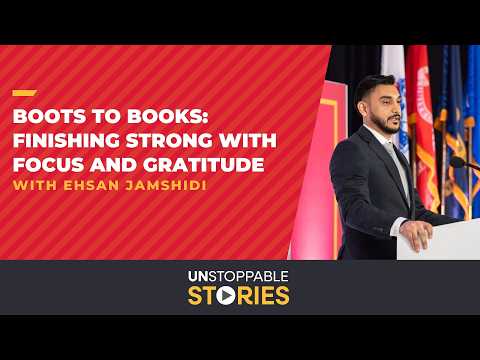
Host Nathan James sits down with Marine veteran and UMGC alumnus, Ehsan Jamshidi to trace a journey that begins in Afghanistan and evolves into a life of service, study, and purpose in the United States. Ehsan shares how his mother’s sacrifice and the challenge of learning English shaped his mindset, why the Marine Corps Embassy Security Program became a proving ground, and how discipline, attention to detail, and gratitude guided each decision along the way.
He recounts the 2021 Kabul evacuation turning personal when his own family needed a way out, then describes rebuilding after medical retirement, transitioning into a Department of Defense role, and finishing both a bachelor’s and a master’s with top grades. The conversation highlights practical lessons for veterans and adult learners, use every resource, keep your network active, and move forward with steady routines that compound over time.
His incredible story of perseverance and his commitment to excellence in the classroom earned him the 2024 UMGC Student Veteran of the Year award
Episode Information
Ehsan Jamshidi
The evacuation in Afghanistan in 2021. It came out of nowhere. No one expected it to happen as fast as it did happen. I didn't think much of it until I realized my mom was there. She went to visit my brother. Okay, now I'm going to get involved. 100% became personal at that point.
Narrator
Welcome to the UMGC podcast Unstoppable Stories with your host Nathan James.
Nathan James
Hello, everybody. All right. I'm here with Ehsan Jamshidi. I'm really excited about this. His son, is, veteran of the US Marines. He has already earned his bachelor's degree back in 2023. And is wrapping up his master's degree in criminal justice management here.
Nathan James
And, in 2024, he was the student veteran of the year. And I'm just happy to have you on his side. How you doing?
Ehsan Jamshidi
I'm doing great. I'm glad. And I'm excited to be here. Thank you. Nate.
Nathan James
Yeah, absolutely. Really excited to dig into your story. Let's start with your early life. Okay. You were born in Afghanistan. And eventually you transitioned, to the U.S.. Why? Why the transition.
Ehsan Jamshidi
Here? I'll try to keep it short, but, you know, so we transition from, from Afghanistan to the U.S. in the year 2000. And it was because at the time we were, you know, there was, we're on the back end of the Russian and Afghanistan war. And at the time, it was very dangerous to be in Afghanistan.
Ehsan Jamshidi
So my mother wanted, a better place for us, a safer place and a better place to where we had opportunities to go to school and be safe. So we decided to, you know, apply for the law degree status. And eventually we got selected and came to Memphis, Tennessee. Once we got here, you know, it was a new opportunity, a second chance, basically.
Nathan James
Wow. How about that now? When you first got here? What was it like getting accustomed, you know, to your new life here? Especially not knowing the language. What did that look like for you as far as pursuing your education? As a as, you know, being four years old and now getting used to a new system.
Ehsan Jamshidi
I still remember, actually, the when I first got here, around four years old, it was actually, a very shocking moment because I didn't know what was going on at the time. We're just move in. We don't have anything, leaving home, for me, I didn't know what home was because I was still too young.
Ehsan Jamshidi
But for my mom, I could see it in her face like she was. She's in kind of distressed and leaving. When I came here, I didn't speak like English, you know, and I went to kindergarten. I think I started kindergarten, past half of the year. So there was, like, less than a quarter left. I had a fell in kindergarten, which, I remember, getting training kindergarten teachers speaking to me.
Ehsan Jamshidi
I'm looking at her like, what are you saying? You know.
Nathan James
What?
Ehsan Jamshidi
I ended up telling kindergarten, I got, behind, but it was just difficult just not knowing English. My mom and know English. No one in the family knew English when we first came.
Nathan James
Yeah. Yeah. So. Well, I mean, you clearly, you know, you press through it and, I mean, so your mom, I know was instrumental, and, you know, supporting you and guiding the family through this chapter. Let's put her, you know, on the stage. What was what her role during that time mean to you?
Ehsan Jamshidi
You know, she she actually, my dad never made it, here. It was just my mom. And my dad stayed back in Afghanistan while the two brothers. So when mom came here, And if anyone knows anything about like that, the Muslim and Afghan culture is like a mostly the Afghan culture. The women, you know, don't really work.
Ehsan Jamshidi
They stay home. They're like, job title is like housewife and, stay at home. So my mom never worked, in terms of, like, being on her own. So when she came to America, like, she had to, like, work and she had to provide for us. So it was a is a very like, you know, it was kind of a shocking moment for us as well as for her like, oh, well, now I have to take care of the whole family by myself.
Ehsan Jamshidi
So it was tough. She didn't speak English, and I remember her working, like 2 or 3 jobs and she, she was struggling. And I remember we were struggling because she. She'd go to work and try her best to, like, work there. While trying to speak to the manager in, like, a different language. And it it was a very tough time and but but she was like, what I if you see what I said about her, she was like the like the bedrock of everything.
Ehsan Jamshidi
She held everything together and she kind of, put our, all of us on her shoulders. And that's. That was like my first real lesson of what leadership is. What? The way she was sacrificed her whole life for us.
Nathan James
You know, it wasn't just you, right? It was how many. How many siblings do you have with you as well, making this transition?
Ehsan Jamshidi
Yeah. So was my sister, who was year younger than me. And then my two older brothers, that came with us. So two older brother, me and, my younger sister.
Nathan James
And my mother. Yeah. And eventually you worked your way through school. You end up finishing high school, right? Which is great. I mean, like you said, it was a bit of a slower start as you're getting accustomed to things, but. Wow, you finish high school. That's incredible. I'm sure you were proud. I'm sure your your family was proud.
Nathan James
I'd imagine right.
Ehsan Jamshidi
Now. Yeah, it was definitely the first stepping stone of, you know, get the education that I needed. I finished high school three years. Not a lot of not a lot of people know that. Wow. Finished in three years. Yeah. Because I, I, I skipped enough sophomore year, of high school, not sophomore year.
Ehsan Jamshidi
Freshman year of high school. Excuse me? I skipped, freshman year high school, so I ended up finishing three years. But, you know, again, school for me was like a stepping stone to education. I knew from a young age that it was very important. Because if you were, if you're educated, and you knew the right things and you are able to get by in life when like what I education I knew from a young age, like, if you didn't have the education, you're not able to get it.
Ehsan Jamshidi
And if you didn't have the degree at when I was growing up at the time, you need a degree to do certain jobs. Now it's becoming more of like experience terms. But like at that time you needed to have a degree. And and I also enjoyed learning. So that was like it was a stepping stone to go where I wanted to go.
Nathan James
Yeah. Did I read or hear that? It wasn't always encouraged to pursue education. I mean, just culturally growing up. Is that a thing, too?
Ehsan Jamshidi
So that is true in Afghanistan and America.
Nathan James
Yeah.
Ehsan Jamshidi
In Africa and Afghanistan, it is true because culturally, like going to school, like it takes years, right? Education is awesome. Learning is not something you don't learn. Get a degree is not something you're going to get within like a day or two. It takes time and if you're in a place where you need it, I mean, like, you need to provide for the table, you need to provide for your family, like going to school.
Ehsan Jamshidi
And then also it cost money and you don't have money to begin with. Going to school is not an option. You have to go to work and provide and help with family. So in Afghanistan and also the opportunities are not there, like the way it is here. So that is true. So my family like unfortunately like they didn't have those opportunities, like the way I had it and my sister had it.
Nathan James
So you mentioned this spark, this love for learning that you had. Do you have a memory of when that spark originated, especially given the fact that it wasn't something like that was, common to have a big spark for in, you know, in, in your culture previously you had it, you know, you got this hunger for it and you never stopped.
Nathan James
Is there a moment where you looked at the importance of education and said, oh, I'm doing this?
Ehsan Jamshidi
Yeah. I think it goes back to where my mom, was working three jobs and she basically sacrificed everything she had for us and, and those in that time, I was able to understand, like, the education is the only way for a ticket for me to get come out. So if I'm gonna if my mom is, sacrificing everything and I don't utilize this ticket that I have and pursuing it and learning and becoming better through through education as well as other things, then I'm wasting my time.
Ehsan Jamshidi
And as well as wasting my mom that whoever who sacrificed everything for us. So I think that's for came on early age where I when I saw my mom lead us and give me that that target that I wanted and basically give me that second chance and sacrifice everything to for me to get that second chance. So that's pretty much how it started for me.
Nathan James
After high school. Eventually you decided to go in the direction of criminal justice. Right. How come?
Ehsan Jamshidi
Oh, I actually wanted to go for law, become a lawyer attorney. And but I ended up deciding to do criminal justice because, well, actually, let me just step back. I wanted to eventually go to become an attorney because you have to do a bachelor's first. So I ended up deciding to do cruel justice because criminal justice was a good lead.
Ehsan Jamshidi
Segue to me coming to an attorney. Told, after you finished your Bachelor. So I ended up deciding to go to college because I knew college was always going to be something that I wanted. And minimum was bachelor's, so I that was always part of the, my, the five year plan.
Nathan James
Okay. All right. Well, so you end up joining the Marines. Okay. What inspired you to do that?
Ehsan Jamshidi
You know, I was in class with, a 20 year Army veteran. And he was my, he was a, a classmate of mine who was going to school after he retired from the army. And he he was my class project. And I remember hitting him up all the time like, hey, we got it. We got we got, it was an English class.
Ehsan Jamshidi
I was like, hey, we got to discuss this project. It's due a certain time. Like, we got to, like, work together. Every time I call him up, he's like, hey, man. He's like, I, you know, let's go shooting or something. Let's go to the shooting range. I'm like, we got a project to do. So, you know, he can take me, shoot it, and then I, I got, you know, that's when I learned how to shoot a weapon for the first time.
Ehsan Jamshidi
I never shot a weapon at that time. Before that, I was a first time. And it was with him. I remember going in the range of like, oh, wow, this is pretty cool. Like, you know, I always wanted to be a police officer as well. Like, that was also something I always wanted to do. So I was like, this is pretty cool.
Ehsan Jamshidi
It's like, hey, he's like, hey, you should know what you should do. So you should join the Army. The Army. I was like, I'm in college right now. I don't think I'm going to go join the Army. I'm in college. He's like, nah, use like you could get an education and serve your country. You know, I was like, let me think about it.
Ehsan Jamshidi
Eventually, the next time I hit him up for the project, he said, hey, let's go shoot it. I'm like, now we could go shoot him, but we got a project to do.
Nathan James
(Silence)
Ehsan Jamshidi
I was like, you know what I met up with? We went shooting again. I was like, okay, look, I'll go to the army recruiting station, recruiting station. So I ended up going there then to get the spark for it right away. So I decided to go literally like 500ft away and go to the Marine Corps recruits.
Ehsan Jamshidi
As soon as I came in there and they told me they're like, hey, you're not going to you don't belong here. You know, you're not going to make it. By the way, I played sports and all, I was physically fit and I thought I was, I was able to do it. And the second I came in there, like, hey, you're not going to make it.
Ehsan Jamshidi
And that I think that challenge was what I needed.
Nathan James
Yeah. I'm like, why now?
Ehsan Jamshidi
Now that I know I've been retired and it's part of their tactics, they want the person that wants to be there.
Nathan James
Okay. I and clearly you ended up showing it's you say, actually I'm here to say exactly.
Ehsan Jamshidi
And I came back the next day. They told me to come back next day for a, fiscal PT session. I ended up going to the PT session, and I smoked like a 90% of the the police there. Then the individuals were a part of the, the program that's about to join and that I smoked when the guy was like, you know what?
Ehsan Jamshidi
Yeah, we'll give you a chance.
Nathan James
Yeah, yeah. Okay. Well, there it is. And not only did you make it into the Marines right now, only you make it on you, sir. But you ended up being selected for one of the most elite programs in the Marine Corps, right? And ultimately being assigned, to protect high value officials and and embassies. Were you were you surprised at that selection and what was that like, actually, to actually take on, that sort of special operations role?
Ehsan Jamshidi
So I got selected for the Marine Security program, and, at the time going through it, it was pretty scary, because there's, there's various things you had to do. You got to go to a psych evaluation. You had to submit a 200 cautionary, asking you different ways of if you've done this and that. And then they do an intensive background investigation and, financial, they do a credit, check as well, and all kinds of stuff.
Ehsan Jamshidi
So I remember going through it and I was always nervous. I'm like, okay. Because, I was in class and we had this big auditorium that was in there, and then in the mornings, and we had days like it was long days, the minimum, like days were like 15 hour days and we barely got any sleep. So I remember sitting this our time in the morning, every morning somebody would come in with a piece of paper and they would call like 4 or 5 names and sometimes up to like 20 names, maybe ten.
Ehsan Jamshidi
And they call you if they call your name, it's bad. It's a bad thing because they're telling you to come out, you're leaving, you're getting a job for something in terms of like, they didn't select you. So I ran in there every morning and I'm like, don't call my name. But eventually I got through. I think we started with a class of 250, graduated 120 people.
Ehsan Jamshidi
But, it was a it was it was pretty tough, intensive because they, they go pretty deep in your background and ensure that they are selecting the right person, because we do have, we do get, you know, we do go protect high individual personnel overseas and, protect classified and, embassy personnel. So they want to make sure they're picking the right person.
Ehsan Jamshidi
That's not going to ruin that.
Nathan James
Now, you end up starting, your education with UMGC while you were stationed in Switzerland. So. Okay, your active duty, taking classes. What made it a bit more? What motivated you to to start then in the middle of everything.
Ehsan Jamshidi
So the the program that I was part of my career program allowed you, the, the downtime that you needed to be able to start school and college. And so I was able to do that usually within the military, you're not able to do it sometimes due to deployment. However, I was at, embassy in Switzerland, and I was able I had a lot of downtime to be able to do school.
Ehsan Jamshidi
So I had a marine, buddy of mine who was like, hey, you should you should join, you MGC at the time was, you see, I think it was. And I've always wanted to pursue college degree, and I always wanted to pursue a learn in education. So I was like, absolutely. The heart is hard is hardest part about join.
Ehsan Jamshidi
You know, a new college was the beginning. The beginning stages is always the hardest, especially because you're working full time. You got so much other things you got to do. But like once you get past that beginning stage, it becomes like super easy, because at that point it becomes a habit. But that's that was really what it was as a body, mind telling me about, like, it's a military friendly school and you can do it.
Ehsan Jamshidi
While being in Switzerland. I was like, absolutely, let's do it. And I signed up.
Nathan James
Yeah, yeah. Now, not too long after you joined us, there was that massive evacuation out of Kabul, Afghanistan. And, I know that you were directly involved with that evacuation effort. What was that moment like? What was that time like for you, and your team, you know, managing that.
Ehsan Jamshidi
You know, the evacuation in, Afghanistan in 2021? That one was it came out of nowhere, as we know, like, no one expected it to happen as fast, as fast as it did happen, right? However, I didn't think much of it until I realized. Until I found out, mincemeat evacuation, that my mom was there because she went to visit my brother, and I didn't know that that a time.
Ehsan Jamshidi
And, I got told, like, she's there. So I was like, okay, now I'm going to get involved. 100% became personal at that point because I was like, okay, I got to get her out of the country. I knew already that there was no flights available and all flights were canceled because at that point, the Taliban had made it to the capital of Afghanistan, Kabul.
Ehsan Jamshidi
And when they made it there, the president of Afghanistan, he actually evacuated. He, escaped himself. So once he escaped, at that point, I knew, like, okay, they have control of the government. And and I was doing whatever I could do because every, every minute counted. At that point, I was doing whatever I could do to try to get her on a flight out of there.
Ehsan Jamshidi
My nephew was there to my my sister's son, which was like four years old. So I was trying my best to get them out. And and the thing was that tickets, usually cost like a thousand at this point. It was like $15,000 per person. However, I or anyway, I brother's like, like, let's buy the ticket because this is the only flight out of Afghanistan.
Ehsan Jamshidi
If we don't get her on this flight, there's no longer going to be any flights available. And we bought the ticket and the flight got canceled. There were like it was a Turkish airline. They're like, we're not flying Afghanistan. Afghanistan has been compromised. So, you know, at that point, we weren't able to do it. And I ended up like I had to other, ways.
Ehsan Jamshidi
I had contacted the Marines at the embassy, and I had a buddy that was part of my unit that went to Afghanistan to help with the evacuation. H kayak.
Nathan James
That's scary. Come on.
Ehsan Jamshidi
Now, when it up, contacting him to, like, coordinate to get my mom in in on the in the airport because the airport was secured at that point by the Marines. So to get her on in the airport was very difficult because we're talking about thousands of thousands Afghans are all right going crazy because the Taliban is here and they know the old Taliban, the old Taliban is dangerous, violent and and they will kill you if you do something wrong.
Ehsan Jamshidi
So, and if you don't follow the rules. So, everyone is going crazy. They're going to the airport. They're like, trying to escape. And and in the midst of all this, I'm trying to, like, figure out where, tell my buddy where my mom's at. And it was, it was very tough. But eventually, after three days of our sleeping outside and, then into her way closer and closer to the gate, he was able to find her and bring her on, on base, on on that car inside the airport while secure.
Nathan James
And did you have direct contact with your mom during those three days or. No.
Ehsan Jamshidi
So she was actually very, it was very hard to get in touch with her because there were so many people there. That connection to call her was hard. And but my buddy, I had all I was able to contact him on, like the daily basis. And he was busy. Like we're talking about, I if I'm not mistaken, there was like over 50,000 people that were evacuated within the two weeks.
Ehsan Jamshidi
So he they're only there for two weeks. He was busy in those two weeks. He was trying to evacuate all American citizens. And then, first American citizens, obviously the embassy personnel, staff and then the Afghans that worked with the Americans. So you need vigils. I had special immigration visas and some CIB visas.
Nathan James
Okay. Now, I'm I'm glad she's back safe. And, you know, I, I know that must have been, you know, a tremendous relief, you know, for you to to find her in a crowd like that. I mean, that's somewhat like a needle in a haystack that we're talking about. Plus, and now you have Taliban closing in. I mean, yeah.
Ehsan Jamshidi
Yeah. And like, my mom, she got teargassed while she was in the crowd because they were trying to control the crowd. So she was getting teargassed. I got a video of that, too, and, like, mind that my nephew, you could just see he's, like, six years old. He's just like, what is going on? And he's getting Teargassed can't breathe.
Ehsan Jamshidi
He's like, what is it? Am I going to die? So he doesn't know what's going on? Because they're trying to control the crowd. And at the same time, the Talibans are also part of the checkpoint, too. To the airport. There they are working. What? What the what? The Marines to control the crowd. Which is something that no one has, saw coming because the Taliban, the Marines were they're not.
Ehsan Jamshidi
They don't. Yeah, yeah. I mean, we were at war with them. So it was very shocking. And I spoke to my my friend as I was in Asia as a marine, I was a, hey, like, what was it like to be so close to the Taliban? He was like, he's like, I was looking at them. And I was like, I was like, the enemy's right there.
Ehsan Jamshidi
But I can't. I can't do anything because. Or because we were told not to shoot there as long as they if they don't shoot them, we're not going to shoot. Yeah. So he's like, it was, it was like it was a weird experience for him and, and, and my mom was the same way. She was like, I'm looking at them.
Ehsan Jamshidi
I'm like, they're going to kill me or what's going on? So they're like, yeah, she's scared to go through the checkpoint because the checkpoint. Yeah, the past checkpoint to get to the airport. So she's like, I don't know what's going on. She was scared. And she's getting teargassed in the midst of all that. So it was definitely it was, it was like for her.
Nathan James
Yeah. I can't, I can't imagine. Wow. So. All right, you end up serving for years. Abroad included. Right. And, you ended up facing medical retirement due to injury, right? Okay. What was it like managing that process? Because I think that included I think it was three major surgeries. Right. And you had to press through that.
Ehsan Jamshidi
You know, that was actually one of my, one of the, not the most heartbreaking moments in my life, but like, it was a heartbreaking moment because at that point, I was, going on ten years in the military and, I, I wanted to do minimum 30 years, like, I was all in, I love the Marine Corps.
Ehsan Jamshidi
I didn't want to get out. And I was almost forced out due to the fact that, the injuries are just way beyond my control. I remember not trying to go to medical when my when I was, when I had some of these injuries. Because I knew if I go to medical, they're, they're going to take me off this deployment.
Ehsan Jamshidi
They're going to take me off this mission, and I don't want to be off the mission. So I had in my mind pushed through the pain, which is not a good thing because it made it worse. But, but it was it was a very heartbreaking moment for me because I never wanted to get out at ten. I wanted to stay in minimal 30 years.
Ehsan Jamshidi
And, to this day, it hurts like, I want to like, go back in and continue that service because it was something that I, that became part of me. And I loved it and I enjoyed it, and I loved being around the Marines.
Nathan James
Well, so you end up working as you are now with the defense counter, intelligence agency, you're, working there as a risk management officer right there. And, so what's that? You know, from what you can tell us, let's that involve a little bit. And, does your military experience help you at least succeed? Are you able to segway that into what you do now, at least?
Ehsan Jamshidi
Yeah. So it my current job does connect as part of DoD. So, in the military, I was part of DoD. So like DoD, me being part of the military definitely helped with that job because I was able to, we fall under the same policies because it's part of D.O.D.. So I understood the policies, and I knew everything.
Ehsan Jamshidi
So it was definitely a easy transition to that. And, yeah, basically, you know, it was a easy transition. And they provide clearance just about personnel as well as industries. And I work on that industry side.
Nathan James
Yeah. Yeah, that makes sense. Gotcha. Well, so all this time. Right. You're working your way through your classes. You end up earning your bachelor's degree in 2023. And so that was a really special moment. And then, 2024, you were selected as our student veteran of the year. What was that experience like for you? And what did it mean to you, to be selected that to, for that honor?
Ehsan Jamshidi
Well, at then that at that time, it meant everything to me because because I just I was going through a transition out of the military. I was like, I was a few months out of the military at that point. I remember I went through a lot of, surgeries. I went through, just a lot of things at that time.
Ehsan Jamshidi
And school was everything was piling up and transition out of the military, if anyone knows, out of the military was no easy task. It's like, I think one of the hardest things some people would go through. So at that time, it meant everything to me. Just because I knew I never I tried to push through everything like there was nights where I just were like, I just want to quit.
Ehsan Jamshidi
I no longer want to, you know, work. Like, can I just sleep all day or not do as much things I'm doing at that point? So it meant everything, and it wasn't just because of the title, but it was because it represents like resistance, sacrifice and the journey from like, refugee to marine to graduate. So I was it meant everything to me.
Nathan James
Yeah. And I remember personally being able to be there and host you for that. You gave a fantastic speech, your essay for for that award was phenomenal as well. And, so I gotta give you a shout out there. I know your family is proud. I know your family was so proud. I mean, you have said, that education doesn't have to look one way.
Nathan James
That's something that I think you feel pretty strongly about. And like you mentioned, it can be a really disorienting time, right, to transition away from the military. What advice do you give to other parents about the the value of education? And bringing stability there? Yeah.
Ehsan Jamshidi
I will forever, like, say, education is very important. You know, even though to this day people say education, a degree these days is not as important as it was back in the day. I think a degree this day is still as important as it was back in the day. And what I tell the veterans is like, I would tell my my Marines, I always tell them like, pursue a degree, pursue something, pursue learning, because we always going to we're always going to be learning as we go.
Ehsan Jamshidi
And you should never stop learning. And I told them there's no one way path to success. You know, there's no deadline in on learning. You know, there's no like, okay, learning stops after I get a degree. What do you start at 20 or 40. You know, it's it's never a right time. You should always start if you can in college.
Ehsan Jamshidi
And you just see like builds, you know, for like adults in the military or individuals that don't have the time, they're working full time, like, just she's perfect for that. And it helps you in what that transition, you know, like, I'm just built to be able to support individuals with all those, working environment. Like, I had a lot of things going on, but I was able to do that because the school was able to support then.
Nathan James
Yeah. You're multitasking, right? I mean, I claim in a way that I think it would be hard for a lot of folks to even, you know, imagine. Right. With your active duty responsibilities. And then after you transition, you're dealing with the emotional weight of that. And at the same time, you didn't stop, you weren't giving yourself these huge breaks or whatever, even, but at the same time, you were you were pressing through and continuing, to prioritize your education and not just to, you know, just as an average student either.
Nathan James
You know, I know you had a 4.0 GPA, through your bachelor's, and I think you're maintaining that now. Now, even in your master's degree. That's impressive. That's impressive. And I'm you've got to have some pretty good time management there as well, I'm sure. Sonya, you're killing it.
Ehsan Jamshidi
Yeah. No, I, I remember getting good grades in college, in high school, but I think the Marine Corps helped me with attention and detail, like attention to detail in the Marine Corps, something that I've learned, and I carry that on to the education, system. Like the way I look at certain things now is like, I look at it like everything, every detail matters.
Ehsan Jamshidi
And if you write a paper, every detail matters. So that's why I was able to be successful, is because my attention to detail that I learned in the military, and I carve that into you. They like make sure attention, detail, attention to detail, because the smallest things, the smallest mistake you make, could have cost him his life. So that's how I took the same, the same thing.
Ehsan Jamshidi
And I took it to the education role. And I learned that. And I was able to be successful doing that. Well, yeah.
Nathan James
Yeah. Yeah. Like a translation. Well, and now you're coming up on your master's degree, sir. Sir, you're coming up on it. I, how are you feeling? What's the milestone mean to you this time around?
Ehsan Jamshidi
You know, honestly, it's it's, again, it goes back to, like, just being grateful. Gratitude. You know, you know, I'm I'm done at this point with my masters. I'm just waiting for the ceremony, which is on December and December, and I'm just grateful knowing that. Okay. Like, I made it through, like, I mean, there's days where I was, in the hospital bed, and I was like, okay, 1159 I have to get that assignment, due.
Ehsan Jamshidi
I, I remember going to going into surgery and I'm thinking like, okay, I got an assignment due in a couple days, and I'm about to go into surgery, and the surgery is not something small like, I'm going to be on painkillers. How am I going to be able to manage through it? And I somehow when I woke up from the surgery that that day, I didn't do anything because I was under it, you know, anesthesia.
Ehsan Jamshidi
And I was, you know, but the next day I'm like, okay, I woke up in pain. Next thing I'm like, oh my God, there's no way I could think, you know, I'm like, in pain. All I'm thinking about is pain. How am I going to get this assignment done? I just got on the computer. I said, okay, let me just do one paragraph at a time.
Ehsan Jamshidi
And it's all about like, just continue and pushing through that one paragraph at a time, one paragraph at a time, until you until you accomplish it.
Nathan James
And I know that, you know, it means a lot to, your mom as well for, for a couple of different reasons. And if you wanted to kind of go into what this means for her, you know, at this stage for you to walk across that.
Ehsan Jamshidi
Stage, you know, that's a very powerful question. And I've thought about it often, you know, especially as I'm near my next chapter in life and because, you know, it's, it brings the whole story back around to opportunity and a second chance. And my mom is extremely proud, and she feels like, okay, all the sacrifices that she made, she was like, it was all worth it because her, she always wanted her kids to be successful, but also safe.
Ehsan Jamshidi
And, you know, the fact that she sees me, you know, getting my master's degree now and she sees that I've continued to work and, and serve, you know, it shows that, like, everything that she put, all the effort and all the sacrifice that she put on us, it was all worth it. And, that's that's, it's definitely, a heart warming moment.
Ehsan Jamshidi
And know that I made her proud because I see her as my hero.
Nathan James
When you look back on your life from Afghanistan, right, to the Marine Corps to to where you are now, right on this pinnacle. What do you hope others take away from your journey? What do you think would be your biggest takeaway?
Ehsan Jamshidi
You know, I think my biggest takeaway is like, be grateful for the freedom and the the values and everything that we have in United States and all and be and trying to try to utilize that. Try to utilize all of the opportunities that we have in the United States to your advantage. Because I've, I've been I've served overseas in many countries.
Ehsan Jamshidi
I've been in a lot of countries and I've seen a lot of places around the world, including Afghanistan, where you don't have the opportunity and education is not on the pedestal the way it is here. And and we have the opportunity here to try to utilize that for your advantage and know that, like other people around the world don't have that.
Ehsan Jamshidi
And it's hard to see that if you've never been through it. For me personally, I've been through it and I've seen it second hand. When I was, serving in the Marine Corps overseas, and I've seen and I'm like, oh my God, like this individual. If he was in America and if he had that opportunity, he would be successful or she would be successful.
Ehsan Jamshidi
And I have that opportunity. And if I get and if I don't take advantage of that opportunity, I just gave up $1 million ticket that that was presented to me and I wasted it. And I have to live with that for the rest of my life.
Nathan James
Oh, that's Well-Said and thank you. Thank you for, taking the time with us today. Son, I, have always appreciated the conversations we've had. Going back to when you're in red of the year, 2024. And, so to be able ta ta ta ta ta for you to share your journey on a stage like this, for others to get inspiration and to keep on pushing it to, it means a lot.
Nathan James
So thank you. Thank you, sir.
Ehsan Jamshidi
Thank you. It was an honor to have to be here.
Nathan James
Yeah, you got it, you got it. And for our audience, thank you for joining us. Thank you for, hearing, you know, about this incredible story. Please remember to like and subscribe. Okay. Engage with the content if you want to hear more unstoppable stories. Also remember, you can catch up on previous seasons or episodes on your preferred podcast channel.
Nathan James
We're there. Okay. And, until then, we'll we'll see you next time.