

UMGC students and faculty partner with early-stage companies to address real-world biotech priorities
For graduate students preparing to advance their careers and biotech startups seeking momentum, the capstone projects in University of Maryland Global Campus (UMGC) biotechnology management and regulatory affairs professional science master’s programs deliver a rare exchange: student teams tackle business and scientific challenges while companies gain research-driven outcomes during critical early stages of growth.

Learners applying expertise where it matters
For students—90 percent of whom are already working in the biotech industry—the capstone is a culminating experience that transforms academic learning into applied leadership.
Neha Dalvi’25, MS, recalls how her team’s work with SereNeuro, a biotechnology company developing non-opioid pain therapies, expanded her perspective on how innovation moves from concept to execution.
“I learned how to bridge the gap between academic theories and real-world applications, while also improving my communication and risk management skills,” said Dalvi, a biotechnology research and development scientist in Maryland.
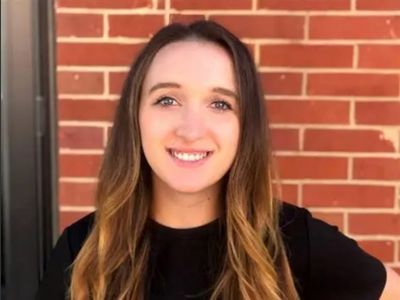
Nicole Cibelli ’24, MS, credits her capstone experience with Congruence Medical Solutions, a company focused on novel injectable drug delivery devices, with helping her secure her current role as program manager at Catalent, a pharmaceutical contract development and manufacturing organization.
“I was looking to advance my career, expanding more into the project management space. This project helped leverage what I had learned in the classroom and apply it in real time, to help resolve real issues facing the company,” she said.
Structuring the experience around real organizational needs is intentional, says Amrita Gupta Madabushi, PhD, who leads the capstone consultancy program at UMGC.
“The biotech master’s capstone course creates a collaborative environment where students apply industry-relevant skills they have learned during the master’s program, and partner companies benefit from strategically informed, research-driven contributions,” she said.

Companies gaining support at pivotal moments
Since 2023, the program has provided focused, short-term support for 17 projects across 11 companies in the BioHealth Capital Region—Maryland, Virginia, and Washington, D.C.—creating a regional pipeline that connects emerging talent with growing businesses seeking support for commercialization, regulatory affairs, clinical development, and market strategy. Business leaders praise the program’s impact.
“The faculty and students brought fresh perspectives, energy, and professionalism,” said Mina Izadjoo, PhD, president and chief science officer at contract research organization Integrated Pharma Services (IPS). “Their unbiased assessment of our technology gave us real value, while giving them a true glimpse into the biotech industry.”
For 8 Count Cosmetics, student contributions supported a critical rebrand and product development milestone.
“The work the students did was integral in helping us work through our rebrand and get to the finish line,” said CEO Savanah Shumaker. “There is no way we would have been able to complete the necessary tasks to get to a final sample run if we didn’t have support from UMGC.”
Co-CEO Jay Shah, PhD, of Neurava, which develops wearable technology for epilepsy management, underscored how the program helped sharpen the company’s strategy at critical early moments.
“The capstone experience was a great way for students to learn more real-world applications for their coursework and for startup companies to find help in areas of need,” said Shah. “This was a great experience for us and helped further develop our commercialization strategy.”
-.png)
A structured, faculty-led partnership model
UMGC biotech faculty cultivate partnerships through regional innovation networks and manage collaboration logistics alongside UMGC’s legal and administrative teams. Prior to kickoff, all parties execute confidentiality agreements to safeguard intellectual property, so founders can engage confidently.
Over a 12-week engagement, capstone teams work closely with CEOs and senior leaders to produce detailed research-backed reports with actionable recommendations grounded in real-world constraints.
“The capstone courses allow students to apply the knowledge and skills they have gained throughout the program to an authentic project that has real-world consequences,” said Robin Searles-Adenegan, PhD, portfolio director for UMGC’s Biological Sciences, Biotechnology and Lab Management programs.
“Working with real CEOs from actual biotech companies places the students in a true professional setting, equipping students with the insight, perspective, and professional readiness required in today’s workforce.”
Learn more and get involved
UMGC invites biotech companies and prospective students to engage with the capstone program. Startups seeking research-driven support in regulatory or commercialization strategy can express interest by contacting amrita.madabushi@umgc.edu, while future students can explore opportunities to gain experience through applied industry projects.